
Tuesday 23 October 2007
We were away at 8.30 am and it was raining.
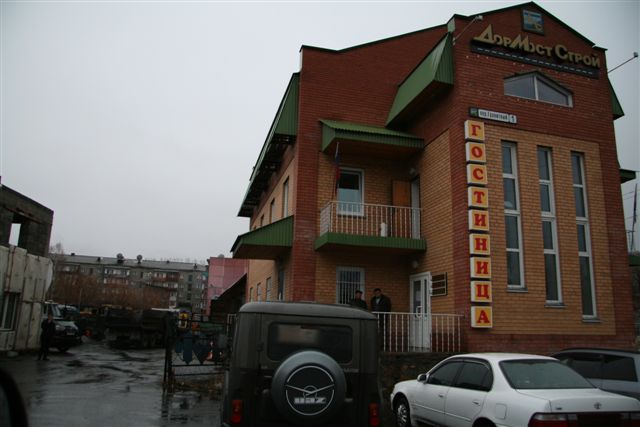
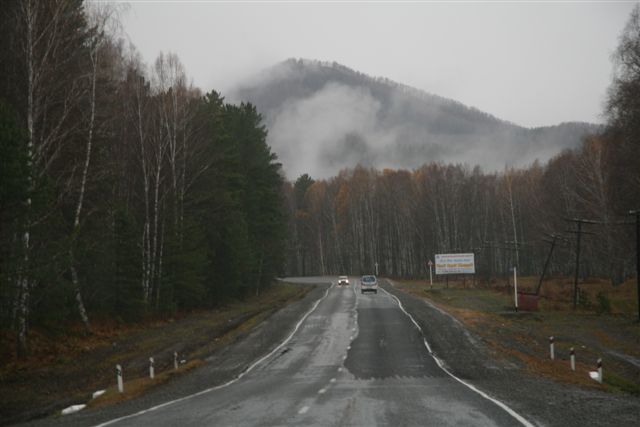
This was the first real rain we have had since Norway. We could hear the rain during the night but felt warm and snug in the Earthroamer. We were also delighted that we had done so much work to fix the vehicle for our hopeful expedition to Mongolia, and eventually to Vladivostok.
As we drove off we noticed that the rear camera had stopped working, and with modern communications we simply used our standard Australian Next G cell phone (with extra bands) to call Mike at Earthroamer in Denver. He advised how to program the Pioneer unit which displays the rear camera, and we got it working again.
We had feared that when we did the welding on the water tank bracket that the camera had somehow been zapped. However all that had happened was that when we disconnected the batteries (for safety) while doing the welding, it had zeroed the program in the display. All was OK.
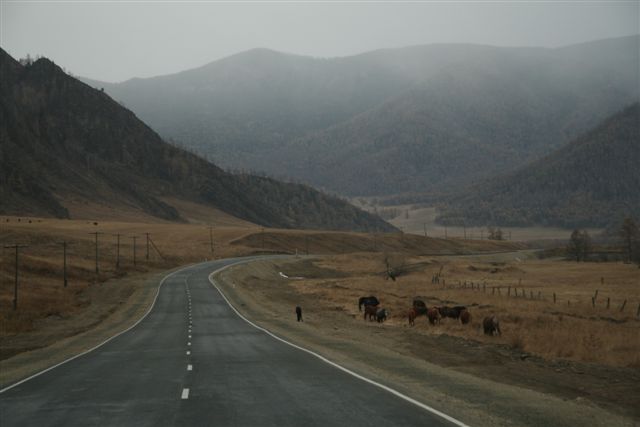
We were driving through the magnificent Altai area of Siberia. Some people describe it as Siberia’s Switzerland, but Pip and I believe that it was far more like Northern Canada and Alaska on the Alaskan Highway. There was similar scenery with similar trees. It was absolutely magnificent.
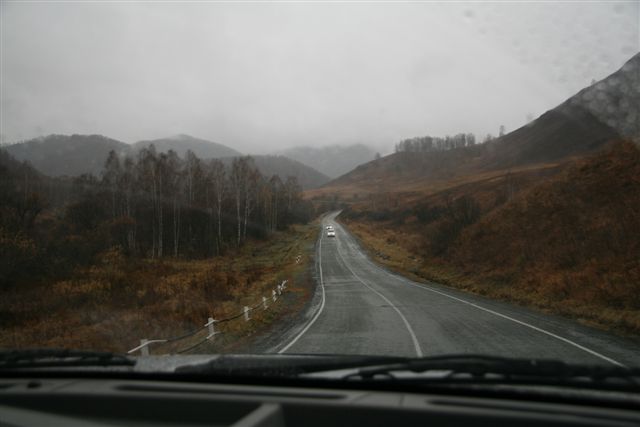
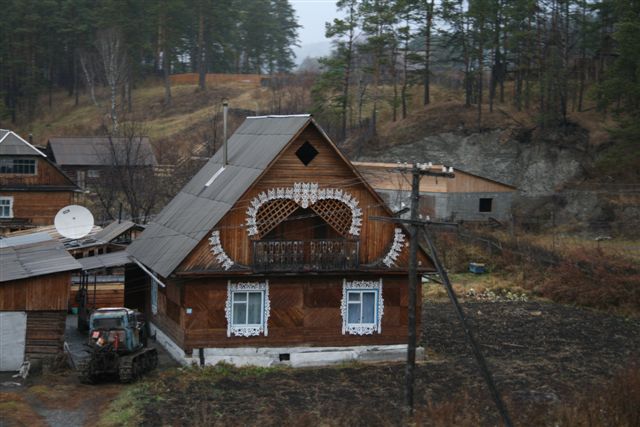
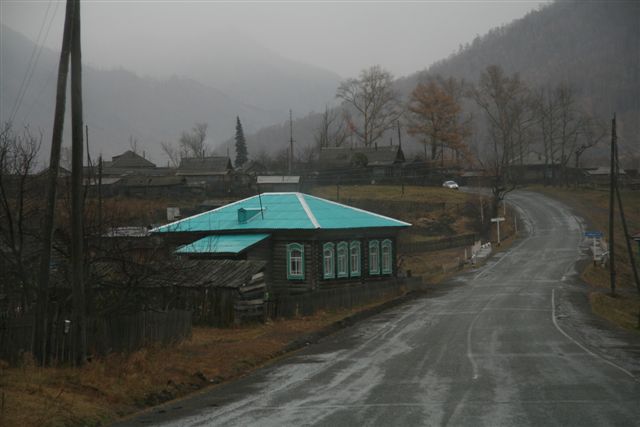
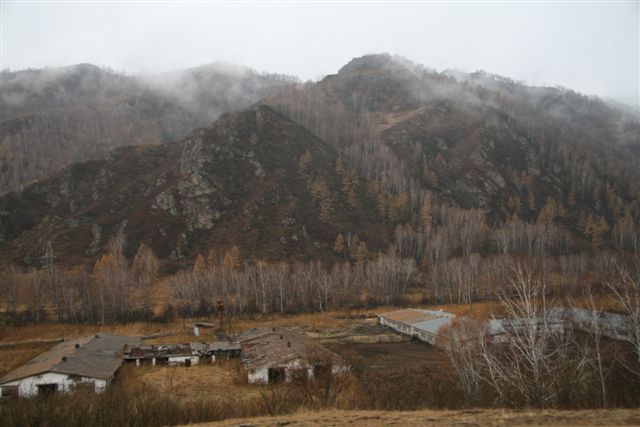
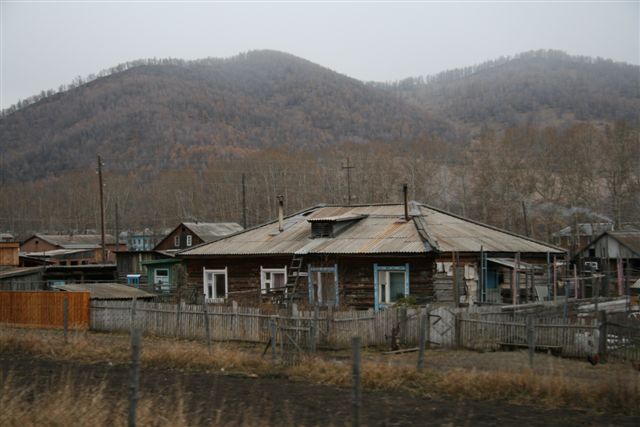
We were in for a surprise. The rain soon stopped but as we climbed towards the Seminsky Pass, the temperature dropped dramatically and the rain turned to snow.
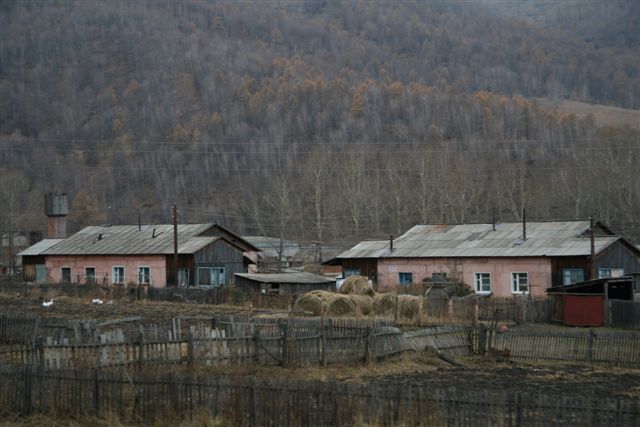
In the end we were driving on about 100 mm of snow. The road was very slippery and the snow storm reduced visibility to about 400 metres. By driving slowly over the summit we were able to control the 7 tonne Earthroamer.
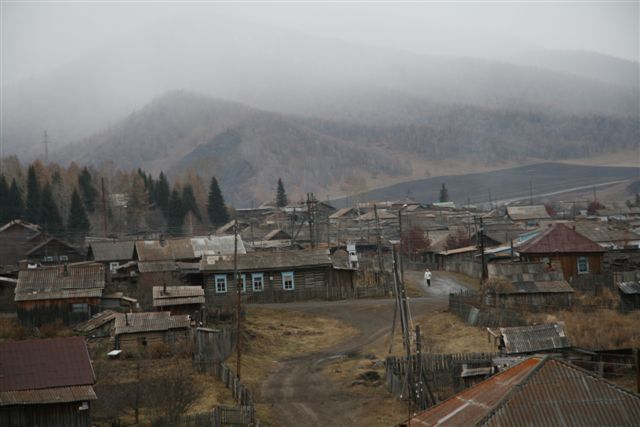
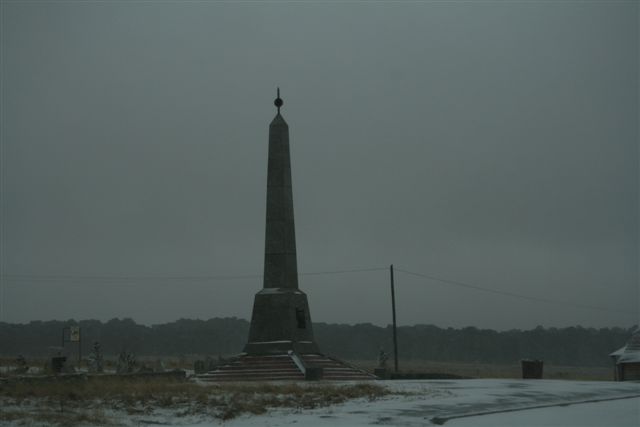
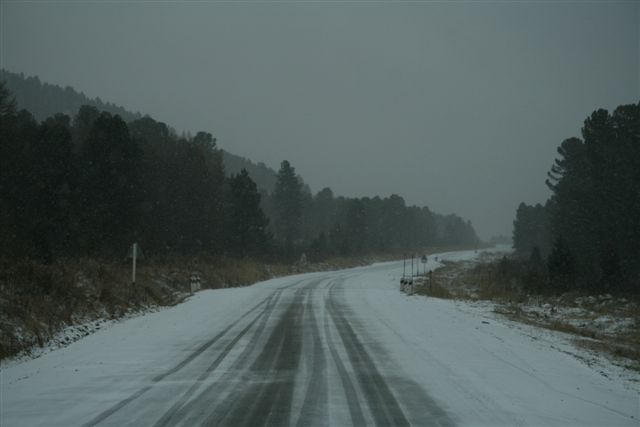
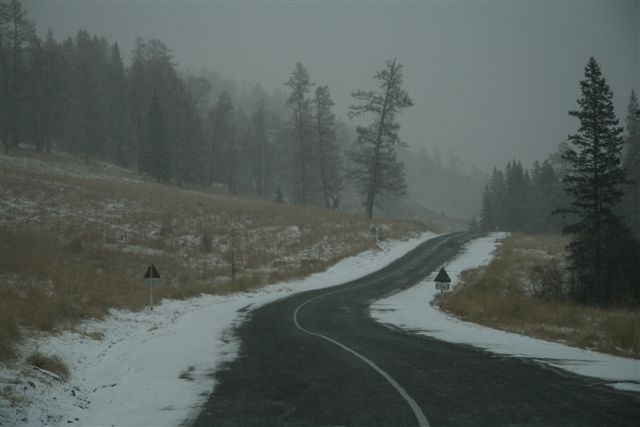
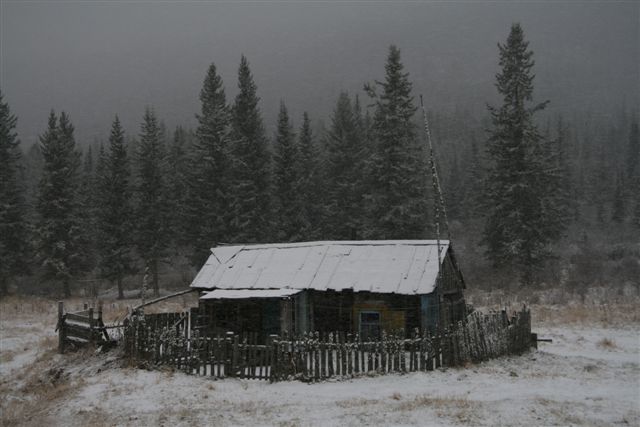
At the time we thought the altitude was only 2,000 feet or so but it must have been higher as the temperature quickly dropped to 27° Fahrenheit – yes, that is 5º below the freezing point.
The oil consumption seems to have dropped to about 3 litres per day. When we say “consumption”, we mean the oil required. Unfortunately the oil is actually being dropped onto the road. We hope to have it fixed in Ulaan Baatar – or perhaps we will wait until we get the vehicle to Perth. We will have to work that out.
After crossing the pass we dropped down to the Katun River at the Ilgumen Rapids.
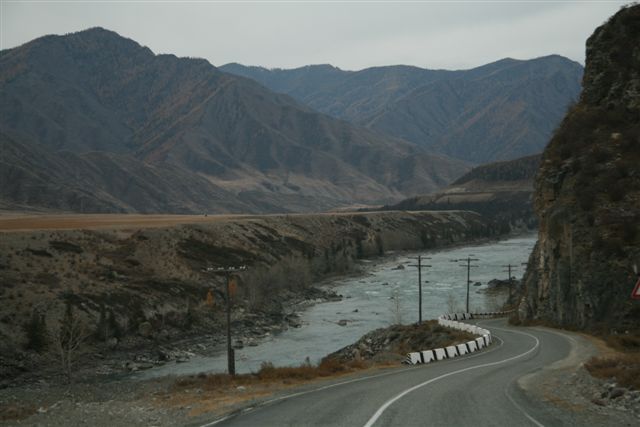
This river is used by Russians for major rafting activities during summer. Due to our delay we passed well after summer, so just about every little village had been abandoned. We understand that in the middle of summer it is incredibly well populated, but we hardly saw any vehicles on the road.
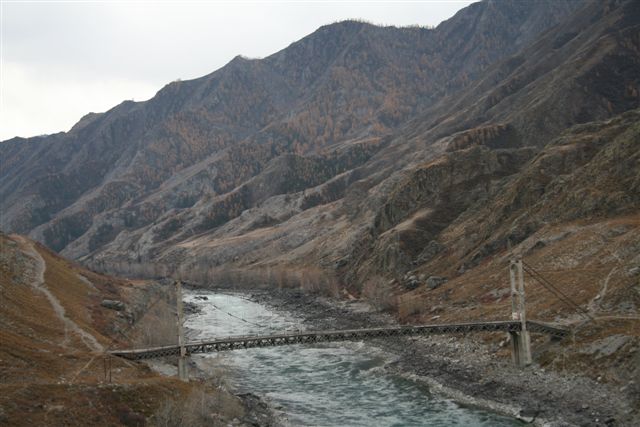
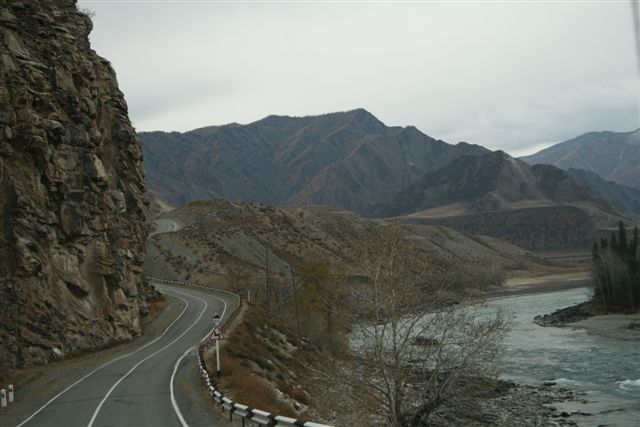
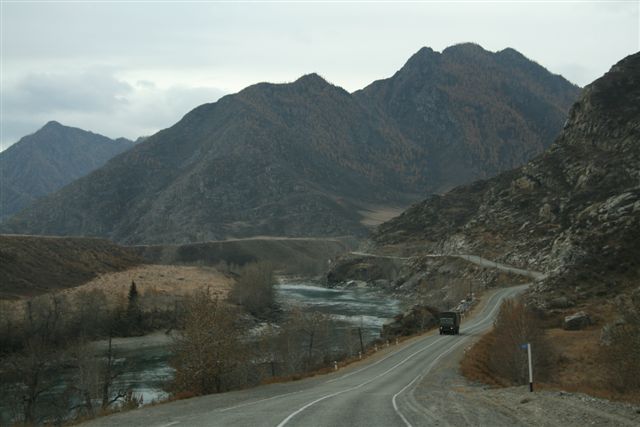
The good news is that the 500 km or so that we drove was on good roads of the type that you would see in the USA or Australia. They were nice and smooth. At times were able to drive at the speed limit of 90 kph.
At about 12.40 pm we stopped at a little picnic area for lunch beside a stream. We made a cup of tea.
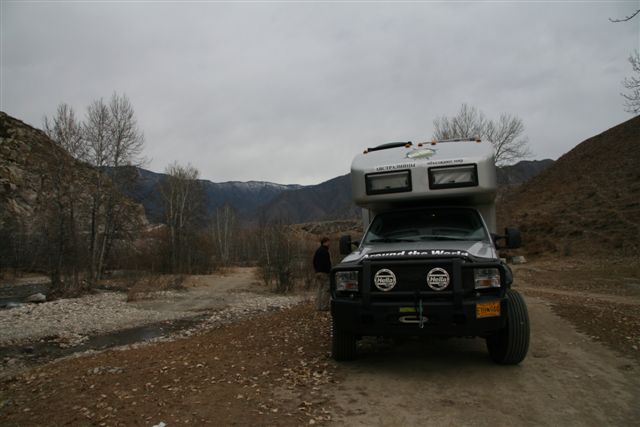
The temperature outside is freezing. Gradually as we drove up the Catun River valley towards the border, we climbed to over 5,000 feet. Fortunately the weather improved. The snow on the ground seemed to dissipate and we ended up in a dry, broad valley.
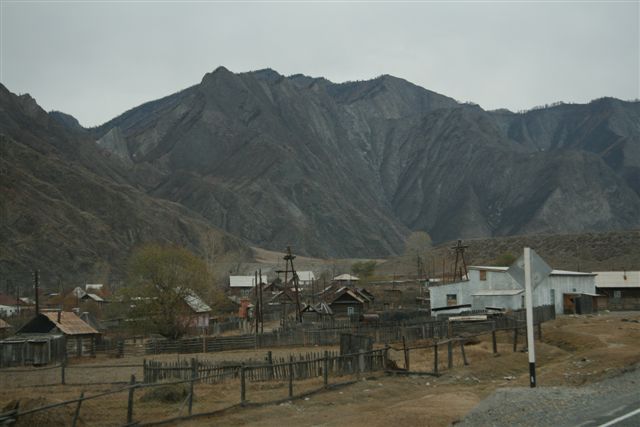
We had been told by many people that when you drive into Russia you have to register your visa. When we came in from Finland we tried to do this at a hotel in Saint Petersburg – but they told us that it was no longer necessary. However we checked with the Australian Embassy in Moscow and they seemed to think that it was necessary, so we stopped at the small town of Aktash and found the local Post Office.
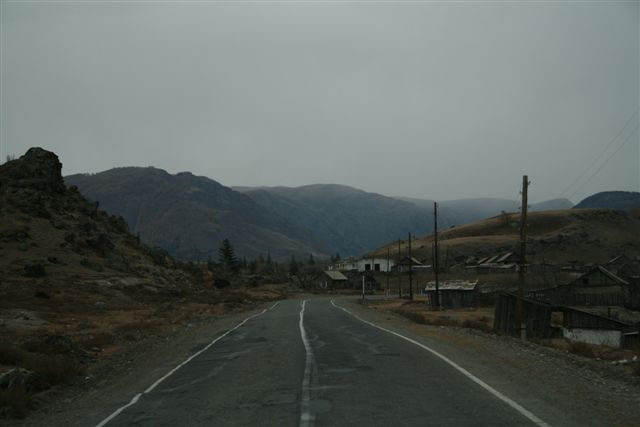
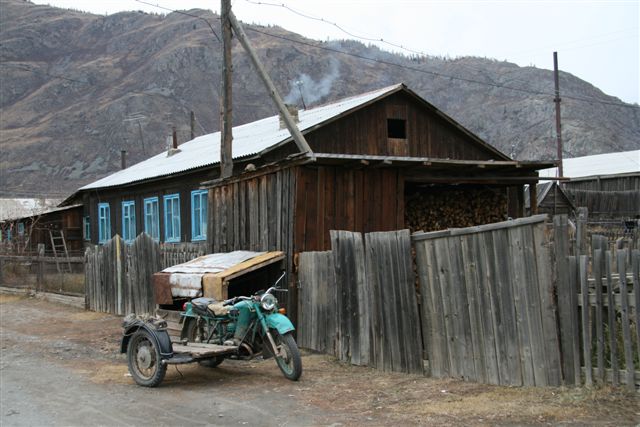
We then experienced 1½ hours of the most incredible paperwork drama you could imagine. We had to fill out form after form – in duplicate but with no carbon paper. At one stage we made a small error and they insisted that the whole form must be re-done.
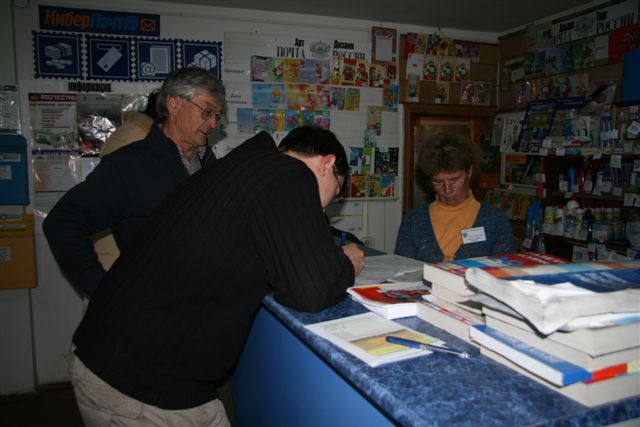
One of the ladies put three wax seals on each envelope containing the forms and the photocopies of our passports etc and sent them off to Moscow. We were given small slips of paper, which we understand we must present at the border. It will be interesting to see if we need to do this.
Isn’t it incredible that one part of Russia is as modern as anywhere in the world, but the other part of Russia still has a lot of the bureaucracy of the old Soviet Union? It reminds me (Dick) of the aviation system in Australia – people are hanging on to ridiculously unnecessary bureaucracy.
At one stage, Alexey (who was filling in the forms for us) asked what Pip’s job was and how long she had been in the position. We said “secretary” and “40 years”. Why would a bureaucrat in Moscow want to know how long a “grey nomad”, who was driving through the Altai, had been working as a secretary? Who knows?
The total cost was 350 Rubles – about $16 Australian dollars. It looks as if the Post Office may have been privately run and this was a way they could make a dollar. Considering that two ladies spent 1½ hours working on it, this is not a good way of making money.
The temperature had now increased to 36º Fahrenheit – 2º above the freezing point.
At 5.30 pm we were above 5,000 feet and driving on good roads. We decided that we would stop for the night at Kosh-Agach. What a fascinating little town! As we drove around trying to find a hotel room for Alexey, we wasted 30 minutes driving backwards and forwards – with everyone giving different directions.
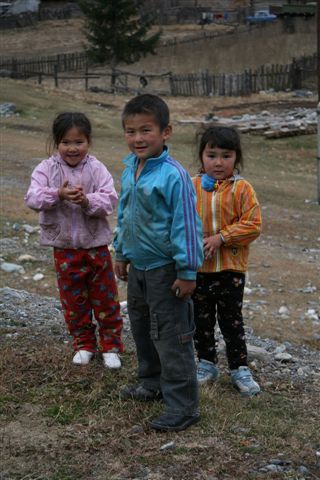
At one stage we stopped outside a school and all the kids ran out and started cheering. Dick stood behind the kids while Pip took a photograph.
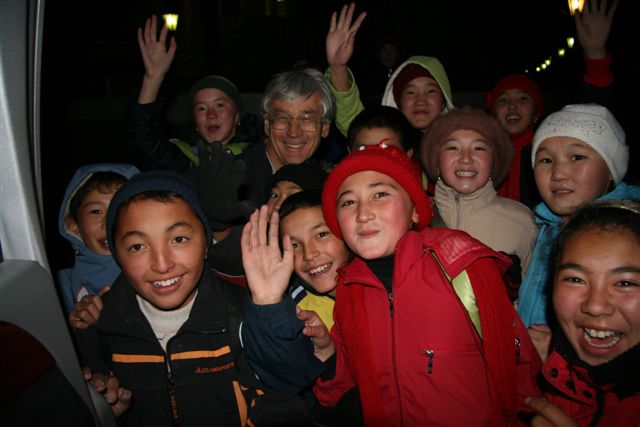
Eventually we found a hotel for Alexey. His room (which was unfortunately shared with a friendly truck driver) was 300 Rubles – about AUD $12. We parked the Earthroamer at the rear and turned on the internal heater. We are very snug and happy here. We watched “Love Story” on DVD and worked on the diary.
Alexey found that he could hire a taxi to drive to the border post. This means that Alexey can come with us to help with the paperwork before heading back to Almaty.
We would like to say at this point how fantastic it has been to have Alexey with us. We don’t believe that we would have got through without him – especially with the major repairs to the mounting of the Earthroamer campervan fibreglass shell to the chassis. Alexey has been absolutely fantastic in every way. Getting through the Kazakh/Russian border in 2 hours and 20 minutes was extraordinary. Other friends have taken 7 hours to do the same thing. Thanks Alexey – and thanks to Rustem Rymkulov and Steve Kapelle for the incredible assistance.
Alexey will travel by taxi to Barnaul, board a flight to Moscow, and then take another flight to Almaty so he can return to work. It was a job well done.
During our drive we found that the Kazakh people are the most wonderful in the world – and their roads are the worst!
The Taldyqorghan manufactured batteries that we installed in Almaty appear to be working really well. We even had a pizza for dinner tonight – using the microwave. Our dinner started with the frozen pizza (which we bought in a supermarket in Gorno-Altaisk). We then had pancakes, which we had purchased from the same supermarket, with a delicious mulberry sauce (which seems to have been blended with wine) given to us by Alexey’s father. It was a scrumptious meal.
We are apprehensive now because we have to get through the border post. It looks as though no one is travelling across the border at the moment. We understand that the road has snow on it and we could be cutting our own tracks. Let’s hope that the Earthroamer doesn’t slip off in the “no man’s land” between the Russian and Mongolian border posts. We understand that the record for the longest time to get through has been three days, and a normal time is about 7 or 8 hours of paperwork. Tomorrow we will tell you what happens.
We drove 467 km today. Our location tonight in Kosh-Agach is N 49 59.8, E 088 39.9. If you would like to follow our journey on Google Earth, we travelled from Gorno-Altaisk and crossed the river at Ustsema, through Cherga, Karakol, Aktash and we are now at Kosh-Agach. We will be going through Tashanta to the border tomorrow.
Today 467kms 24,915kms since Anchorage, Alaska
Click here for the next day.
Click here to return to the Smith’s Overland main index page.